
The South and Southwest Chicago Suburbs Quietly Transforming in 2026
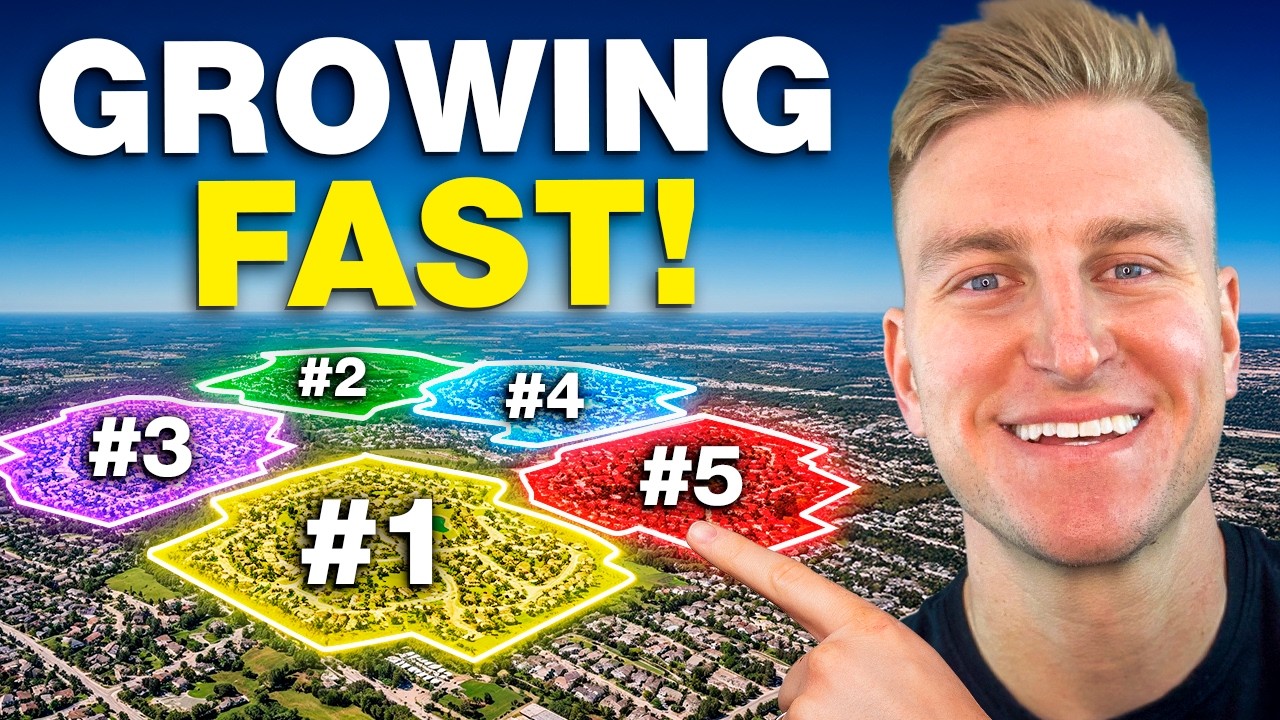
Several Chicago suburbs are seeing millions of dollars in new investment, yet home prices still reflect what these places were before the momentum started. That gap is a real opportunity for buyers. Below, I break down four south and southwest suburbs that are changing fast, what’s driving it, who each area fits best, and the trade-offs you should know before you move.
New Lenox: The Suburb Preparing for What’s Next
New Lenox is one of the clearest examples of a suburb actively preparing for growth.
The new sports complex at I-355 and I-80 has already changed how people use the area. On weekends it’s packed with teams, families, coaches, and tournaments. Activity is already here. Booked weekends, strong regional draw, and performance reportedly nearly tripling early revenue forecasts. With more than 1,000 free parking spaces, baseball fields, multi-sport fields for soccer and lacrosse, and batting cages, it’s become a destination people drive to on purpose.
The village is also investing in infrastructure for a larger population. A federally backed water reclamation facility is under construction, and Will County recently secured a $27 million federal transportation grant to fund a rail crossing overpass nearby, with construction projected to begin this year. Federal dollars at this scale typically signal expected growth and proactive planning.
New Lenox also has one of the few meaningful new-construction pipelines this close to Chicago that’s still relatively accessible to first-time buyers priced out of options farther north or in the western suburbs. Multiple builders are delivering across price points, from townhomes to semi-custom single-family homes. The market has been moving well, with many homes seeing multiple offers and a notable share selling above list earlier this year.
Key trade-offs in New Lenox
- Property taxes trend high. Pull actual tax bills on specific homes before you commit.
- The Metra ride to LaSalle Street Station runs over an hour; daily downtown commuters should factor that in.
- Outside of New Lenox Commons, this is a car-oriented suburb rather than a walkable-downtown lifestyle.
Buyers who move before the rest of the market catches up will have first access to the new-construction inventory.
Orland Park: The Downtown That Was Missing
For years, Orland Park had almost everything buyers wanted. Orland Square Mall, dense retail along La Grange Road, strong schools, broad medical access, and a lifestyle where most needs are five minutes away. The knock has always been the same: no clear, walkable center.
That gap is finally getting filled. In early 2025, Edwards Realty planned to break ground on a $120 million mixed-use “Main Street Triangle” downtown at 143rd Street and La Grange Road, with retail, office, fitness, daycare, and a target completion in early 2027. The first confirmed anchor restaurant, Weber Grill, opened recently, and Chicago Medicine has an existing Center for Advanced Care on-site with an additional medical facility under discussion. That institutional anchor typically brings steady foot traffic and real staying power.
Heroes Park is also planned as a signature green space with farmers markets, summer concerts, a pedestrian boardwalk, and a winter ice rink, the kind of Saturday destination Orland Park has lacked for two decades.
Home prices here haven’t fully priced in the finished downtown. Typical single-family homes are running in the mid-$400,000s to mid-$500,000s, with pockets well above that. Inventory across Cook County has been tightening, and Orland Park sits inside that low-supply zone.
The tax advantage most suburbs don’t get
Illinois property taxes are high statewide, but Orland Park benefits from its massive commercial base. Retail and restaurants along La Grange Road and the mall help absorb a share of the local tax burden that might otherwise fall more heavily on homeowners. Always review actual tax bills for each property (Cook County specifics matter), but the municipal tax pressure can be slightly lower here than in similar suburbs without that commercial density.
What to keep in mind
- Orland Park has a 20-year history of downtown plans that didn’t materialize. This plan is better sequenced—residential density and institutional anchors are in place before full build-out, but buyers should proceed with eyes open.
- The pricing gap between what Orland Park is today and what it’s becoming will narrow as construction wraps and foot traffic grows.
Frankfort: The One That Already Had Its Moment
Frankfort already has the destination energy the others are building toward. On a typical Friday night, Trails Edge Brewing has a line out the door, Fat Rosie’s is packed, and the patio at Seno Sushi is full. The downtown core along Kansas, White, and Ash streets is walkable, locally owned, and full of character, with 35+ active restaurants and bars in or near the district.
The village isn’t coasting. A state parking grant will expand downtown capacity, a new mixed-use building on White Street opened with multiple tenants, and the village launched a formal downtown urban design and planning study with public workshops and a defined next phase.
Schools are a major draw. Lincoln-Way East High School holds the Illinois State Board of Education’s highest designation on the 2024–2025 report card. Families shopping the south suburbs often start with Lincoln-Way East and then find Frankfort attached to it.
Market reality
- Frankfort has moved into premium territory. Competitive homes often sell fast at or above list price.
- Buyers comparing to Naperville or Hinsdale keep landing on the same point: your money goes further here. Larger lots, larger homes, custom and semi-custom builds (the village doesn’t allow big-box builders), and a comparable school caliber at a lower price point.
- Two major residential subdivisions were approved in late 2025, including a long-stalled single-family community and a mixed residential project on a former industrial site. New supply is entering a tight market, giving buyers more options before pressure builds again.
Mokena: The Quiet, Serious Pick
Some places are quiet because there isn’t much going on. Mokena is quiet because the people who live here don’t feel the need to broadcast it. Think quiet streets, big homes on bigger lots, and a close community that doesn’t compete for attention. Many buyers who land here have ruled out Frankfort as too busy, Orland Park as too commercial, and New Lenox as too spread out.
Signals have started to shift. The village board approved a full commercial development package at La Grange Road and 191st Street, including a hotel and a food truck park. Strong indicators that outside developers see enough steady demand to commit real money. New restaurants are coming in, and momentum tends to build on itself.
The core zip code has outperformed on year-over-year price growth. Entry-level single-family homes are running roughly in the mid-$400,000s, the core market in the upper $500,000s, with larger homes well above that. If you need a brand-new build, options are limited here.
Mokena shares the same Lincoln-Way district as Frankfort. Lincoln-Way Central, which covers most of Mokena, also carries the state’s top designation. Families who do the school research and then run the numbers often end up here for comparable school quality at a slightly softer price point than Frankfort.
Trade-offs in Mokena
- The downtown is small, and dining depth is limited. Most residents drive to nearby suburbs for a night out.
- The commercial node at 191st is early. Today’s charm is quiet and residential; tomorrow’s amenities are still being built.
Buyers who get in before it gets louder are the ones who catch it early.
Why This Window Won’t Stay Open
The rare setup in real estate is when several nearby markets evolve at the same time. Once change is visible and complete. When the parks open, the restaurants fill in, the medical anchors expand, and the new homes are absorbed. The pricing advantage tends to disappear. That window is open right now across these four suburbs, but it won’t stay that way.
Need Help Deciding or Moving?
If you’re weighing these south/southwest suburbs against each other, I can help. I’ve been a licensed Illinois realtor for six years, and I work this market every day. Email me at john@sintagerealestate.com.
Here’s what I’ll do for you:
- Match your goals to the right suburb, neighborhood, and builder (if applicable)
- Break down actual property-level tax bills and assessments
- Outline commute realities, school boundaries, and resale factors
- Coach you through timing, including a lease-cycle dynamic many buyers don’t recognize until it costs them
I’ve also posted a fresh market update for summer 2026. Worth a watch if your timeline is flexible.
Note: Prices, timelines, and project details referenced here are current as of mid-2026 and subject to change. Always verify property-specific taxes, school boundaries, and HOA/builder terms during your due diligence.
Posted by John Sintich on
Leave A Comment