
Orland Park IL Downtown Development: What’s Planned, Who Pays, and What It Means for Home Values
People in Orland Park IL have been waiting for a real downtown for a long time. There have been plans, headlines, and plenty of promises, but for years there wasn’t much on the ground to get excited about. I spent a lot of my early years living in Orland, and a walkable downtown always felt like one of the few things the village was missing.
That’s why this development matters. The project, described in the latest information I reviewed as a roughly $120 million investment, could create a place where you get off the train, grab dinner, meet friends, and stick around instead of heading straight to your car.
But excitement and certainty are two different things. Some pieces are already here. Others depend on leases, financing, permits, and deadlines. For homeowners and buyers in Orland Park IL, understanding those differences is much more useful than taking a big headline at face value.
The details below reflect the project information and market snapshot discussed in 2026. Construction schedules, approvals, and housing prices can change.
Key Takeaways
- Downtown development combines commercial space, healthcare, and Heroes Park, while the hotel and arts center remain uncertain.
- TIF revenue, proposed medical lease income, and parking leases support financing, but village budget exposure remains.
- The development follows separate timelines and phases rather than one guaranteed downtown opening date.
- Walkability could strengthen nearby housing demand, but property-specific costs and lifestyle trade-offs should guide decisions.
Table of Contents
- Where the New Downtown in Orland Park IL Is Taking Shape
- What’s Open, What’s Proposed, and What’s Still Uncertain
- Healthcare Is a Major Part of the Orland Park IL Growth Story
- Heroes Park Is Intended to Be the Downtown’s Centerpiece
- How Orland Park IL Plans to Pay for Downtown
- Where the Financial Risk Still Sits
- The Downtown Timeline: Think Phases, Not One Grand Opening
- What Downtown Could Mean for Orland Park IL Home Values
- Before Buying Nearby, Check the Trade-Offs and the Details
- Should You Wait for Heroes Park to Open Before Selling?
- The Bottom Line for Orland Park IL
Where the New Downtown in Orland Park IL Is Taking Shape
The heart of the development is the triangle of land between La Grange Road, 143rd Street, and the railroad tracks near the Metra station.
This isn’t a completely blank slate. The area already has the station, a parking garage, and the University of Chicago Medicine outpatient center. Nearby, you’ll find Fox’s south of 143rd Street, Egg Harbor Cafe east of La Grange Road, and retail centers along the corridor.
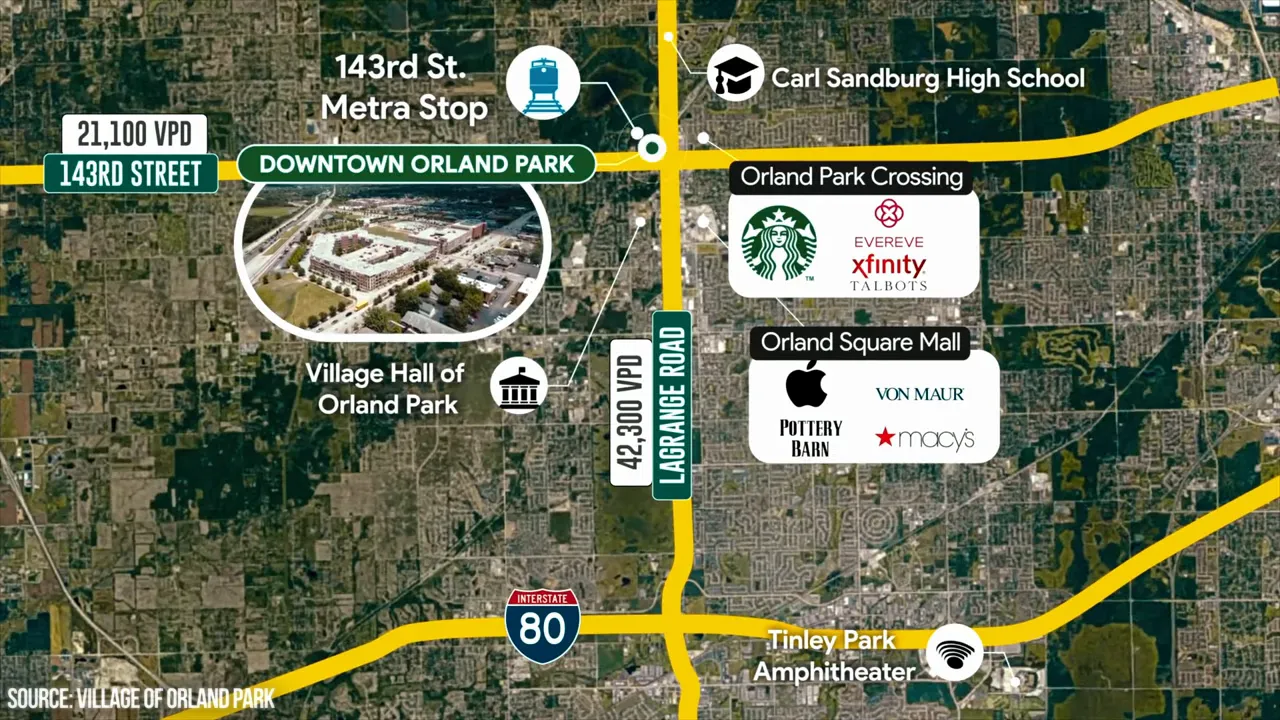
What’s missing is the connection between those destinations. There are places to go, but not yet the kind of concentrated, walkable district that gives you a reason to spend an entire evening there.
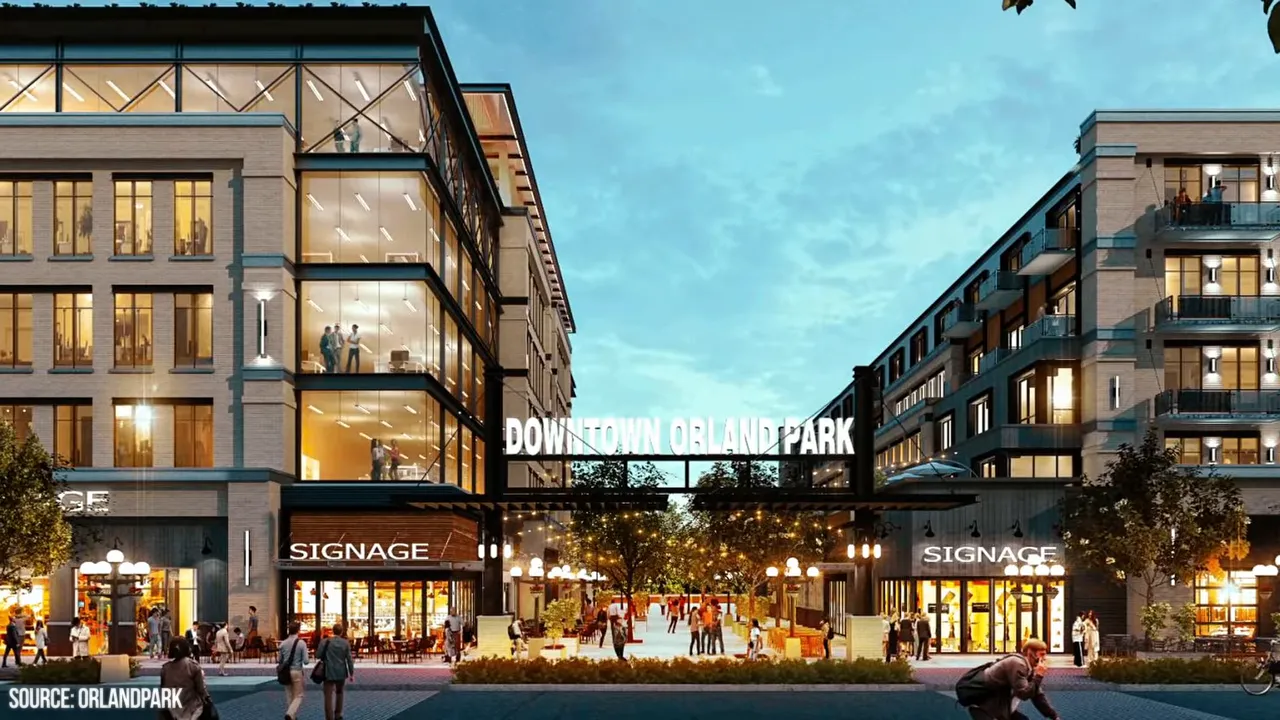
The downtown plan for Orland Park IL describes more than 140,000 square feet of retail, restaurant, entertainment, and office space across the mixed-use development. Think dinner spots, boutiques, coffee shops, and storefronts within a few walkable blocks, rather than another shopping center you drive into and immediately leave.
What’s Open, What’s Proposed, and What’s Still Uncertain
Weber Grill is the first major piece
Weber Grill Restaurant opened in June 2026, giving the project its first major operating restaurant. That’s an important distinction: it’s something people can actually use, not just another rendering.
For the rest of downtown Orland Park IL, though, it’s worth separating the intended uses from the commitments that still have to come together.
A hotel is being pursued, but it isn’t locked in
The village and developer are trying to land a hotel on parcels A and B. That remains a possibility, not a done deal.
If the hotel doesn’t work out, the agreement provides an alternative: those parcels can become offices, stores, and restaurants. So the commercial vision doesn’t depend entirely on securing a hotel, but the final mix could look different from the original pitch.
A performing arts center has a separate decision deadline
Parcel C is being reserved for a possible performing arts center. I’d be getting ahead of myself if I called that confirmed.
The village has until the start of 2030 to commit to the design, permits, and funding. If that doesn’t happen, the land can return to the developer for another use.
That’s the right way to think about this project in Orland Park IL: there’s a framework for development, but several major decisions are still open.
Healthcare Is a Major Part of the Orland Park IL Growth Story
Restaurants and events tend to get the attention, but healthcare could be one of the biggest forces behind this development.
University of Chicago Medicine plans a new multistory musculoskeletal center at 143rd Street and La Grange Road. That would add to its existing outpatient presence, which already provides primary care, specialty care, imaging, and lab services.
This is personal for me, too. I use the existing UChicago Medicine outpatient center for my primary care. Having those services close to home is a meaningful convenience, not just a development talking point.
Separately, Northwestern Medicine is planning a $275 million cancer care facility in Orland Park IL. That is a separate healthcare investment, not another line item to casually fold into the downtown project’s budget.
Think about what care closer to home could mean for a family dealing with cancer. Treatment already brings a tremendous physical and emotional burden. If someone in the southwest suburbs can receive the care they need locally instead of making repeated trips into Chicago, removing that commute could be a huge relief.
The exact benefit depends on where a family lives and which services become available. Still, these investments could make Orland Park IL an increasingly important healthcare destination for the southwest suburbs.
Heroes Park Is Intended to Be the Downtown’s Centerpiece
The development is being organized around Heroes Park, which would expand and transform the existing Crescent Park.
The planned amenities include:
- An ice rink for winter activity.
- Walking paths through the park.
- Open lawn space for gathering and recreation.
- Space for markets, concerts, and seasonal events.
- Restaurant and storefront space in a planned building facing the park.
For Orland Park IL, that’s the difference between simply adding commercial buildings and creating a place people want to spend time.
There’s also an important protection in the agreement: Heroes Park is required to remain a park, with the village owning, operating, and maintaining it. The intention is to preserve that green space rather than allow it to become another building site if surrounding land becomes more valuable.
None of this means Orland Park IL suddenly becomes a place where you can walk for every errand. You’ll still drive for plenty of everyday needs, and Orland Square Mall remains a destination for larger shopping trips. Downtown would add something different: restaurants, events, healthcare, offices, and a place to hang out.
How Orland Park IL Plans to Pay for Downtown
All of this has to get paid for somehow. Before getting into the financing, I want to be clear: explaining the structure isn’t the same as endorsing the village’s decisions. I’m looking at how the pieces fit together and where the obligations sit.
The financing plan relies on several sources rather than one pot of money.
The downtown TIF district
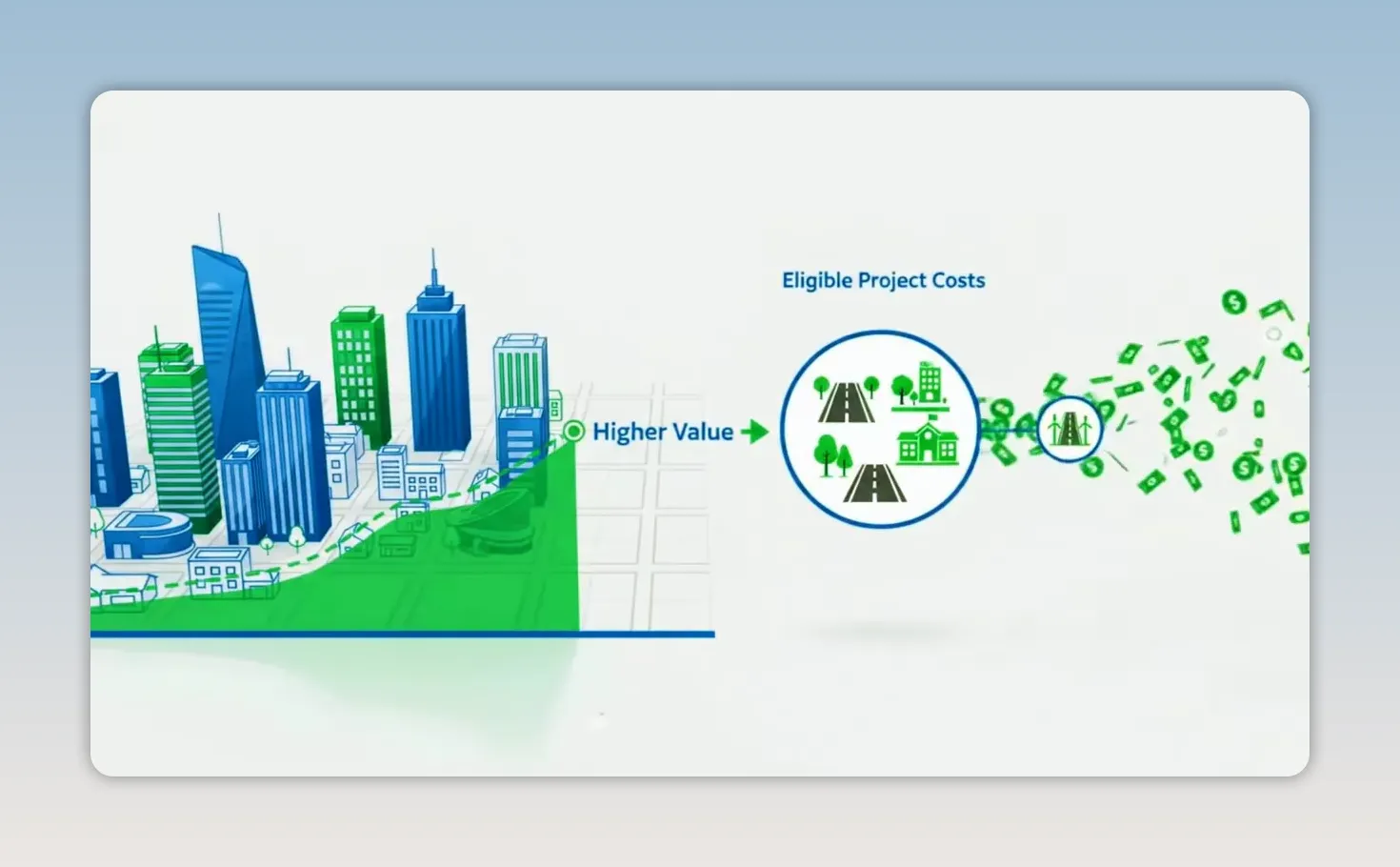
A tax increment financing district, or TIF, establishes a baseline assessed property value within its boundaries. As assessed values rise, the additional property tax revenue associated with that increase can be directed toward eligible project costs.
In plain English, the plan uses part of the future tax growth within the district to help pay for development-related expenses. The village can also use downtown business district revenue, or a combination of those sources, to cover its obligations.
I’m not pretending municipal finance is my deepest area of expertise. The useful takeaway for residents of Orland Park IL is that projected revenue matters, but so do the commitments made against it.
UChicago Medicine’s proposed ground lease
In June 2026, the village board authorized negotiation and execution of a ground lease for the new University of Chicago Medicine facility. That authorization was a step forward, not proof that the entire medical development was finalized.
If completed as described, the lease would generate approximately $10 million in rent over 25 years. That creates an ongoing revenue stream instead of a single upfront payment.
Parking-space leases are another part of the plan. Once the building opens, those are expected to add a little more than $320,000 annually.
The village intends to set aside those revenue streams to help build the park, pay down debt, and support ongoing operations.
Shared parking serves different crowds at different times
The garage arrangement also has a practical side. Outside UChicago Medicine’s weekday daytime operating window, the village says the garage would remain available to the public during evenings, weekends, and holidays.
That means spaces serving healthcare activity during the week could also support dinner crowds, park visitors, and events at other times. For a developing downtown in Orland Park IL, making existing parking work across different uses is an important part of the plan.
Where the Financial Risk Still Sits
The medical lease and parking revenue would make the funding plan sturdier. They do not make it risk-free.
The village is responsible for approved public improvements, including:
- The park itself.
- Utilities.
- Sidewalks.
- Lighting.
It also has obligations to reimburse the developer for certain documented costs. The final amounts were not settled in the information I reviewed.
The financing structure calls for special revenue bonds with a general obligation backstop. Put simply, TIF and business district revenue are intended to repay the bonds. If those sources fall short, the village’s broader budget could be exposed.
So while lease and parking income can reduce pressure on the general fund, they cannot guarantee that the general fund will never feel any pressure.
My take is that solidifying the medical deal is an important foundation before taking on additional phases. For Orland Park IL, a stronger revenue base helps, but it doesn’t erase the need to examine costs, deadlines, and financial exposure.
The Downtown Timeline: Think Phases, Not One Grand Opening
This is where the headlines and the practical schedule start to separate.
An earlier announcement floated fall 2027 as the finish line for the entire downtown. Based on the newer agreement and the status discussed in 2026, I don’t consider that a realistic expectation for the full buildout.
The better way to understand downtown Orland Park IL is as a phased project, with major pieces following separate timelines and the broader development extending closer to 2030.
| Project component | Timing or requirement discussed | Important distinction |
|---|---|---|
| Weber Grill Restaurant | Opened June 2026 | An operating piece of the development. |
| Heroes Park | Construction targeted for late summer 2026, with completion planned for summer 2027 | Targets depend on approved costs, permits, and government signoffs. |
| UChicago Medicine building | First-floor steel must be erected within 24 months of the agreement’s effective date | A construction milestone, not a patient opening date. |
| Hotel | A separate development window under the newer agreement | No confirmed hotel commitment or opening date. |
| Performing arts center | Village commitment required by the start of 2030 | Design, permits, and funding still need to come together. |
At the time of my 2026 assessment, I had noticed activity and orange markings around the park area, but not clear evidence of substantial construction underway. That’s why a target start date shouldn’t be treated as an accomplished milestone.
The medical building’s deadline matters, too. If the first-floor steel requirement is missed, the ground lease can terminate, and the developer gets another opportunity to propose uses for that land. There was no official patient opening date in the information reviewed.
The sequence I’m looking for is the existing restaurant, a solidified medical development, the park, and then the remaining pieces filling in over several years. That’s an expectation, not a guaranteed construction order.
How to follow actual progress
For updates on Orland Park IL, use the Village of Orland Park’s official website to find its downtown development information, meeting minutes, approvals, and roadwork notices.
New proposals and decisions often appear in public records before there’s anything obvious happening on the site. Roadwork notices can also help you track closures and lane changes while planning your trips through the area.
What Downtown Could Mean for Orland Park IL Home Values
The housing market was already strong in the 2026 snapshot I discussed, before the downtown reached its full potential.
- Starter detached single-family homes: Some could be found in the high $300,000 range.
- Condos: Some options fell in the high $100,000s and low $200,000s.
- Median detached single-family home: Approximately $500,000.
- Detached-home price growth: Approximately 10% over the preceding rolling 12 months.
That reflected a strong seller’s market in Orland Park IL and stronger appreciation than the broad national picture I was discussing at the time. These are market snapshots, not current quotes for a particular home.
Why walkability can make nearby homes more appealing
A successful downtown built around a train station can appeal to buyers who want suburban living without giving up every part of a more walkable lifestyle.
That’s particularly relevant for young professionals moving from Chicago. A home near restaurants, events, and the station can make the transition feel less dramatic.
If you’re within roughly a mile of the proposed site, proximity is worth evaluating. But distance on a map and a comfortable walk are not the same thing. Walk the actual route from the home to the station and proposed downtown destinations. It feels different on foot than it does through GPS.
For rail information, check Metra’s official schedules and station resources rather than assuming the commute works for your routine.
Frankfort shows why the idea is worth taking seriously
Downtown Frankfort is a useful comparison. Its restaurants, gathering spaces, events, and historic character have created a lively destination, and I’ve seen substantial premiums for homes within walking distance.
In my local comparisons, some walkable homes have commanded roughly $100,000 more than homes in subdivisions farther east or west. I’ve also seen striking price-per-square-foot differences, with some smaller, older homes near downtown carrying much higher prices than newer homes farther away.
Those observations illustrate how much buyers can value location and walkability. They are not a formula for predicting appreciation in Orland Park IL. The final development, individual property, and market conditions will determine what actually happens.
Before Buying Nearby, Check the Trade-Offs and the Details
Being close to downtown can be a great perk. It can also mean more activity than you want right outside your home.
Potential trade-offs include construction traffic during the buildout, busier evenings and weekends, event crowds, more pedestrian activity, and proximity to existing train noise. Don’t assume the development itself guarantees more frequent train service.
Visit the area at different times of day. Spending time near an established suburban downtown can also help you decide whether that lifestyle suits you.
For anyone buying in Orland Park IL, I’d also verify these details before making a decision:
- The full monthly cost: Look beyond principal and interest. Check the specific property’s taxes and obtain a proposed homeowners insurance quote
- The property’s tax jurisdiction: Taxes can vary substantially across county boundaries, so use the actual property rather than a general estimate.
- Official school assignments: Confirm boundaries through the district, not just a listing portal.
- The real walking route: Evaluate the route to the station and downtown in person.
- The immediate surroundings: Consider how close the house sits to tracks, traffic, and future event activity.
An Orland Park IL address does not automatically mean Carl Sandburg High School. Depending on the property, the assignment could be Andrew or Stagg. Use Consolidated High School District 230’s official resources and ask your buyer’s agent to verify the address directly.
Listing information can carry forward from an older listing without anyone confirming it. That’s not a detail you want to discover after you’ve committed to a home.
Should You Wait for Heroes Park to Open Before Selling?
If you already own near the proposed downtown, it’s understandable to wonder whether waiting could bring a better sale price.
My answer is that the decision should come down to comparable sales, carrying costs, and your own timeline. Nobody can promise when the park will open, when the larger development will be completed, or whether prices will jump at a particular milestone.
A well-executed downtown could strengthen demand for nearby homes in Orland Park IL. But that potential needs to be weighed against what it costs you to hold the property and what moving now would accomplish for your family.
The Bottom Line for Orland Park IL
After roughly 20 years of discussion, the village has moved closer to building through agreements, identified revenue sources, and real deadlines. That’s meaningful progress.
It’s also not the same as a fully funded, fully permitted downtown with every tenant confirmed and one guaranteed opening date.
I’m excited about what this could become. A walkable district with restaurants, healthcare, public space, and events would fill a genuine gap in Orland Park IL. For a real estate decision, though, the exact home still matters more than the headline: its price, taxes, school boundaries, walking access, and relationship to trains, traffic, and events.
Go drive that corner. Walk it. See how it feels. If you’re buying or selling nearby, I can help evaluate your specific situation using local data, your goals, and the costs that actually apply to your property.
|
Leave A Comment