
Five Chicago Suburbs to Know Before You Buy: Growth, Prices, and Trade-Offs
Thousands of people move to the southwest Chicago suburbs every year, but these towns are not growing in the same way. Plainfield added more than 5,000 residents between 2020 and 2025. Orland Park’s population slipped slightly over that period, yet major redevelopment still makes it worth your attention.
That distinction matters when you’re buying. Population growth, new construction, infrastructure investment, and downtown redevelopment can all change your experience, but they do not necessarily deliver the same benefits.
I work in these Chicago suburbs every day, and the five I’d put on your radar are Lockport, New Lenox, Frankfort, Plainfield, and Orland Park. Each has a different answer to the same question: What does your budget actually get you?
The price ranges below are useful starting points, not townwide medians or guarantees of current availability. Housing type, location, condition, and builder options all affect the final number.
Key Takeaways
- Population growth and redevelopment tell different stories about a suburb’s appeal.
- New-construction base prices and initial tax bills can understate your eventual costs.
- Train access only helps when station logistics and schedules fit your commute.
- Verify schools, municipal boundaries, water service, and taxes for the exact property.
Table of Contents
- Lockport: Historic Character With a More Accessible Price Point
- New Lenox: Steady Growth, Train Access, and Investment Behind the Scenes
- Frankfort: Downtown Life and More Space, With a Higher Price Tag
- Plainfield: The Growth Leader, but Not a Cheap-New-Build Shortcut
- Orland Park: Established Convenience With a Major Rebuild Ahead
- How These Chicago Suburbs Compare
- The Address Matters More Than the Town Name
Lockport: Historic Character With a More Accessible Price Point
Lockport rarely gets the attention some other Chicago suburbs receive, but it posted one of the strongest recent one-year population jumps among these five communities. Recent growth matters differently than growth from five years ago. Buyers feel it through competition, and sellers feel it through the number of people coming through their homes.
A downtown that predates the subdivisions
Lockport has something many southwest Chicago suburbs do not: a genuine historic center. The city developed around the Illinois and Michigan Canal, and its old limestone buildings are still standing and being used.
You can walk downtown, follow the canal trail, and visit the district around the Gaylord Building. This is not a newly built shopping center trying to look historic. The downtown was here long before the surrounding subdivisions.
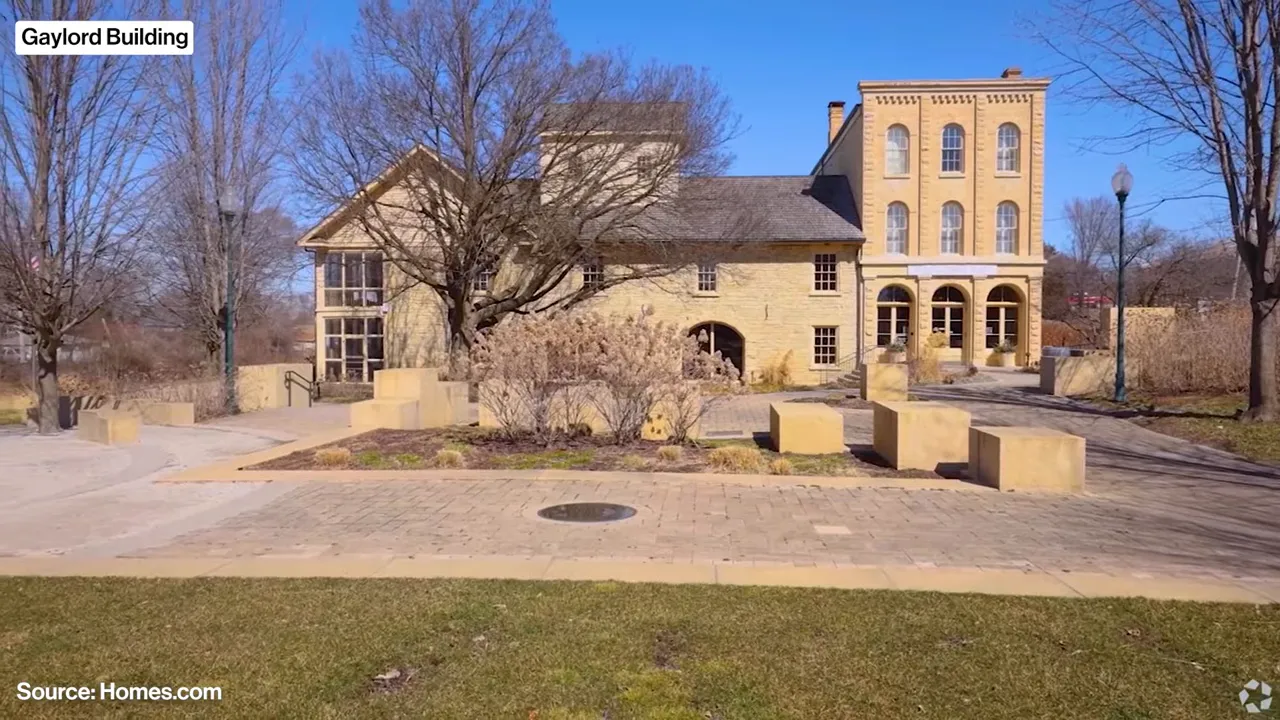
Drive a few minutes farther out, and you get a different side of Lockport: newer subdivisions, townhomes, and quick access to I-355. That combination works well for people who need to move around the region without living directly beside an expressway.
Prices and new construction at Sadie Ridge
Starter homes generally land in the high $300,000s, with asking prices reaching into the low $400,000s. Among these Chicago suburbs, Lockport is one of the more affordable places to begin a search.
It is also worth considering if you want a relatively newer home, perhaps built in the early 2000s, without moving up to Frankfort’s price point.
For brand-new construction, Sadie Ridge sits north of Bruce Road and east of I-355, near the Lockport and New Lenox edge. The city council approved its rezoning and final plan in July 2025, and M/I Homes has single-family homes and townhomes for sale there.
I recently helped a family go under contract on a new build in Sadie Ridge. I liked the neighborhood, thought the construction quality looked solid, and found the builder representatives easy to work with. Incentives were available during that purchase process, although those can change.
The location is a big part of the appeal. I-355 gives you a connection toward the western suburbs and other routes into Chicago. That does not eliminate traffic, but it gives you useful regional access.
Bring your own representation before visiting a builder
Here is the part I do not want buyers to miss: the advertised base price is not necessarily the price of the home you will actually purchase. Once you select finishes and options, the number can look very different.
The builder’s representative works for the builder. Think of walking onto a car lot: the salesperson represents the dealership, not you.
Before visiting new-construction communities in the Chicago suburbs, talk with a buyer’s agent who understands builder purchases. Having someone focused on your interests helps you evaluate the complete price, available incentives, and the decisions you are making before signing.
New Lenox: Steady Growth, Train Access, and Investment Behind the Scenes
“Steady” is the word I would use for New Lenox. It has grown consistently since 2020, and the village is investing in the infrastructure to support more development.
The utility work is boring, but it matters
A new water resource recovery facility is planned with capacity of 5.5 million gallons per day, with its first two phases extending into 2028. Another water-main connection is also intended to add capacity.
Exciting? Not exactly. Nobody falls in love with a house because of wastewater infrastructure. But when comparing Chicago suburbs, these projects tell you something important: New Lenox is planning for growth and building capacity rather than waiting until existing systems are stretched thin.
Test the Metra commute, not just the station location
New Lenox has a station on Metra’s Rock Island line, making regular downtown trips a practical possibility. Still, “there’s a train” is not enough information to make a buying decision.
Before you commit to a house, check the current Metra schedules and work through the actual commute:
- How long does it take to reach the station from that address?
- Where will you park?
- Do departure times match your work schedule?
- Does the return service work for your usual evening?
For commuters choosing among Chicago suburbs, those details matter more than a station icon on a map.
The Wintrust Crossroads sports complex
Wintrust Crossroads opened its first phase in 2025 on approximately 100 acres near I-355 and I-80. It includes fields for baseball, softball, soccer, lacrosse, and football.
The facility is massive, and it is drawing teams, families, and consumer spending into the area. If your household revolves around travel sports, you already know how much a nearby tournament facility can affect your weekends.

One important distinction: these fields are booked for tournaments, leagues, and organized teams. Do not assume you can arrive on Saturday morning and use a baseball diamond as you would at an open public park.
Home prices and Teerling Lakes
New Lenox starter homes generally sit in the mid $400,000s, and desirable homes can move quickly.
Teerling Lakes is another development you may encounter while searching the Chicago suburbs. Pulte’s two-story homes start in the low $500,000s, but that is the starting point, not necessarily the finished purchase price.
The community is large, with amenities including a sizable park, walking paths, a playground, a sports court, and a community pier. Its Landing section for buyers age 55 and older offers low-maintenance ranch townhomes starting in the low to mid $400,000s.
There is also a utility distinction worth checking: New Lenox is connected to Lake Michigan water, while Lockport is not. Despite their proximity, Teerling Lakes and Sadie Ridge do not have the same water arrangement.
I have helped buyers purchase with both Pulte and M/I Homes. I have toured Teerling Lakes with clients and was impressed by the development, although I have not yet helped someone close on a home in that particular community. A builder comparison should account for the specific neighborhood, product, and purchase terms, not just the name on the sign.
Frankfort: Downtown Life and More Space, With a Higher Price Tag
Frankfort has grown substantially since 2020, but population growth is not the main reason people choose it. The downtown is.
It is also where my wife and I chose to build our family. The downtown and schools were the biggest draws for us, and those priorities still explain why I think Frankfort belongs on a Chicago suburbs shortlist.
A downtown you can actually build your routine around
The historic district occupies the original 1855 town site. The Old Plank Road Trail runs right through it, providing more than 20 miles of paved path.
Breidert Green and the surrounding downtown host a farmers market, outdoor concerts, car shows, Fall Fest, art events, and a bluegrass festival. There is a lot happening without needing to plan a trip into Chicago.
The dining scene matters to me personally. After living in the city, I had gotten spoiled by great restaurants. Frankfort has made that transition easier, with boutique restaurants, casual spots, patios, and local businesses filling the downtown district.
I honestly think some meals here hold their own against what you can get in Chicago. That does not mean every restaurant is a city substitute, but it does mean a really good dinner does not always require leaving town.
Among the southwest Chicago suburbs, Frankfort, New Lenox, and nearby Mokena are communities I would pay particular attention to when schools are a priority. My family valued Frankfort’s schools highly, but your research needs to follow the exact address. The Illinois Report Card is a useful place to examine individual schools rather than relying on a town’s reputation.
What the extra money buys
The general Frankfort price range discussed here runs from the low $500,000s into the mid $600,000s, making it one of the priciest towns in this group.
Compared with western Chicago suburbs such as Naperville, Wheaton, Glen Ellyn, and Elmhurst, Frankfort can offer more house for the money on a price-per-square-foot basis. The appeal is often larger detached homes, custom homes, bigger lots, and more separation from neighbors.
Out-of-state buyers often gravitate toward better-known western communities. I would not overlook the southwest simply because it is less familiar, or judge an individual suburb through broad perceptions of Chicago’s South Side. Compare the actual neighborhood, schools, amenities, and property.
The western suburbs have more downtowns and a broader selection of highly regarded school communities. But parts of the southwest are developing more of those same lifestyle features at a lower price point.
The commute is the biggest compromise
Frankfort does not have an in-town Metra station. If you travel downtown regularly, you will either drive into Chicago or drive to a station elsewhere.
That has been the hardest part of living here for me. I still like going into the city for restaurants, concerts, and sporting events. In my experience, the drive can take around an hour with traffic, and a rideshare has sometimes cost around $80. Those are personal examples, not fixed travel times or fares.
I still make the trip regularly, and it is manageable for me. But if you are comparing Chicago suburbs for a daily downtown commute, you need to give this trade-off real weight.
Plainfield: The Growth Leader, but Not a Cheap-New-Build Shortcut
Plainfield added more than 5,000 residents between 2020 and 2025 and passed 50,000 residents. Its growth exceeded the other four communities combined over that period.
If someone says the southwest Chicago suburbs are booming, Plainfield is probably a big part of what they mean.
More construction means more choices, not automatically lower prices
A common assumption is that all the new construction makes Plainfield cheaper. That is not how this market works.
Condo pricing can be comparable to Lockport, while other homes generally fall from the low $400,000s into the low $500,000s, depending on the area and property. The idea of routinely buying new construction in the low $300,000s is outdated.
What new construction gives you is choice: more builders, floor plans, warranties, and newer systems. It also brings costs and restrictions you need to understand:
- Lot premiums and upgrade charges.
- Construction traffic while the neighborhood is being completed.
- HOA rules.
- A higher property-tax bill after the completed home is fully assessed.
That last point is one of the biggest budgeting traps for buyers in growing Chicago suburbs.
Budget for the completed home’s full tax bill
The first tax bill on a new build may include a full year of land taxes without reflecting a full year of the completed home’s assessed value. Timing, including when the certificate of occupancy was issued, can affect what appears on that initial bill.
Build your budget around the full annual tax obligation for the finished home, not a partial first bill.
I also strongly recommend hiring a real estate attorney for a new-construction purchase in Illinois. Have that attorney review the tax-proration provisions and ask whether a larger builder or seller tax credit can be negotiated to help cover the later bill.
Many builders will not agree, but it is worth discussing. The important thing is understanding your obligation before closing, rather than being surprised after reassessment.
Road improvements have a short-term downside
The 143rd Street Corridor project includes a new roadway, a bridge over the DuPage River, and new traffic signals, with work intended to redirect Route 126 traffic away from downtown.
Long term, the goal is easier movement through the area. Short term, nearby buyers may deal with detours, noise, and construction activity.
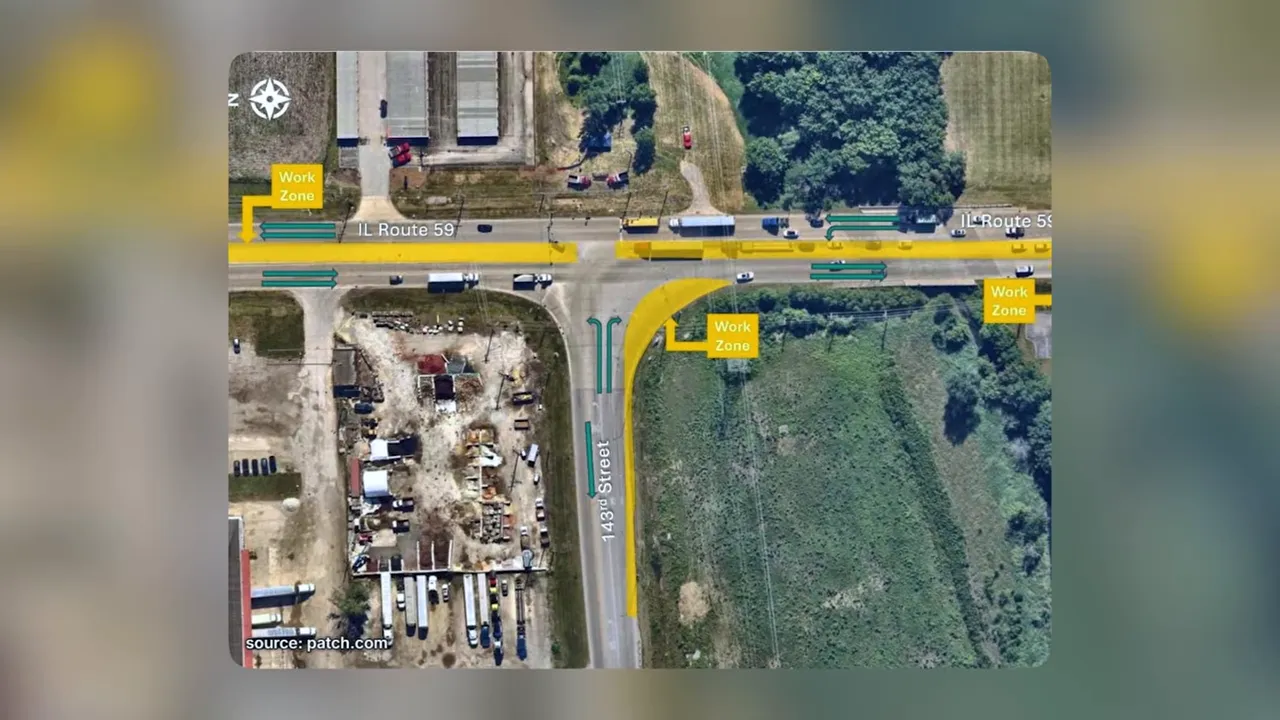
Review the village’s current project information and map before writing an offer. A road project can look minor in a townwide description and feel very different when it affects your daily route.
No Metra station, and an address that needs extra checking
Plainfield has no Metra station within the village. It does have two weekday rush-hour Pace express routes from the park-and-ride south of 143rd Street: one serving the medical district and Union Station, and another serving the Loop.
Check Pace’s current route information before relying on that option. Express bus service is useful, but it is not the same experience or schedule as taking a train.
For a daily downtown commuter choosing among Chicago suburbs, Plainfield would not usually be my first recommendation. Driving can mean several hours of total daily travel in heavy traffic. Test your actual route and work hours rather than assuming the distance is manageable.
Plainfield is also geographically large. A Plainfield mailing address does not automatically establish village membership, school boundaries, or which taxing bodies apply. That needs parcel-level verification.
Orland Park: Established Convenience With a Major Rebuild Ahead
Orland Park is the exception on this list. Its population declined slightly after 2020, so it would not belong in a ranking based only on residents added.
But population is not the only way Chicago suburbs change. Orland Park’s story is redevelopment.
I lived there until I was about eight or nine. Much of what I remember as open space and cornfields is now fully developed. It is a very different community today, and another substantial change is being planned.
A potential shift from shopping corridors to a walkable downtown
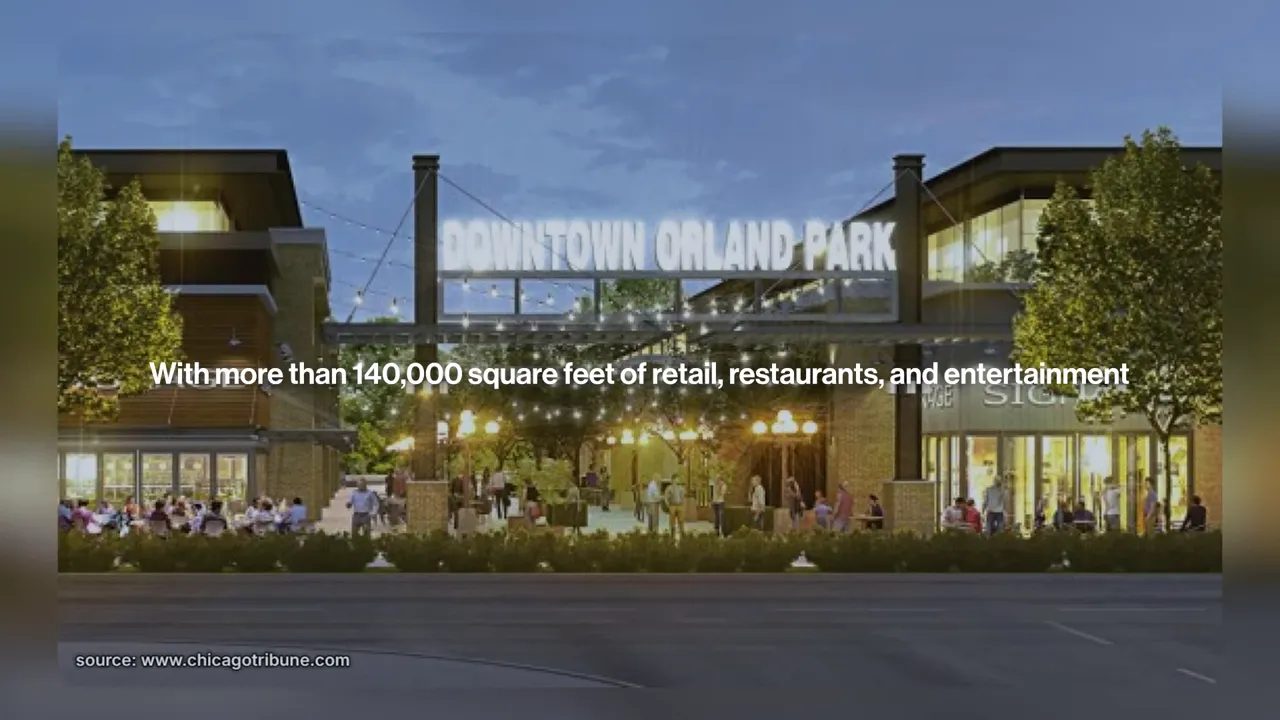
The village’s multiphase downtown project is described as a $120 million investment, with more than 140,000 square feet of retail, restaurants, and entertainment between LaGrange Road and the 143rd Street Metra station.
For a community long associated with LaGrange Road shopping and its mall, a walkable downtown could meaningfully change daily life.
Medical investment is part of the story, too. The village and University of Chicago Medicine signed an agreement for a musculoskeletal care center in the downtown district. A separate $275 million cancer-care expansion has also been discussed for the Orland Park campus in the Centennial Park area.
That expansion was not open at the time of this market discussion. Existing services at the St. George Cancer Institute already include care and access to clinical trials.
Announced and open are two different things. Downtown redevelopment has been discussed for roughly two decades. Check current construction status and opening timelines before treating any proposed amenity as something you can use immediately.
Parks, trains, and a wide range of housing
Orland Park already offers more than 650 acres of village parkland, an aquatic center, connected walking and biking routes, and nearby forest preserve trails.
It also has three Metra Southwest Service stations, the most station access among these five Chicago suburbs. As with New Lenox, verify the service schedule against your needs.
Starter homes generally range from the high $300,000s into the low $400,000s. The housing stock feels more established than much of what you will find in Plainfield or New Lenox, with mature trees, larger lots, townhomes, condos, and golf-course communities.
The overall range is broad. You may find condos in the high $100,000s or estates around $2 million. Those are very different products, which is why a single townwide price tells only part of the story.
Some affordable homes will need systems or finishes updated. In exchange, you get an established community where shopping, services, and everyday conveniences are already in place.
How These Chicago Suburbs Compare
These five communities deserve attention for different reasons. I would narrow the search around your priorities rather than pick whichever town has the biggest growth number.
- Lockport: A more affordable entry point, historic downtown character, newer housing options, and I-355 access.
- New Lenox: Rock Island train access, infrastructure investment, schools, youth sports, and substantial new development.
- Frankfort: An active downtown, dining, and larger homes and lots, with a higher price point and less convenient city access.
- Plainfield: The population-growth leader and a broad new-construction selection, with tax, roadwork, and commute considerations.
- Orland Park: Established amenities, varied housing, three train stations, and major redevelopment plans despite slightly declining population.
The Address Matters More Than the Town Name
This is the most important buying principle across all five Chicago suburbs: verify the property, not just the community label.
School assignments, village limits, water providers, and property-tax obligations can change from one parcel to another. The listing sheet is a starting point, not the final confirmation.
Before making an offer, confirm:
- School boundaries: Verify the schools serving that specific address with the relevant districts.
- Municipal boundaries: Establish whether the property is actually within the named city or village.
- Water service: Confirm the provider and source rather than assuming neighboring developments match.
- Taxes: Review the parcel’s taxing bodies and, for new builds, the expected fully assessed bill.
- Commute: Check the real drive, station access, parking, and current transit schedule.
- Development status: Separate existing amenities from proposed projects and check nearby construction.
The right choice among Chicago suburbs is the one that fits your budget, commute, and daily life at the address you are actually buying. Getting that straight before touring can save you an entire weekend of visiting homes in the wrong town.
|
Posted by John Sintich on
Leave A Comment