
Chicago Real Estate: Where the Ultra-Wealthy Live on the North Shore and West Suburbs
When people picture Chicago real estate at the highest level, they usually picture downtown high-rises. But some of the area’s most expensive homes sit far from the skyline. They are tucked behind mature trees along Lake Michigan or spread across oversized lots in the western suburbs.
There are really two different luxury worlds in Chicago real estate. One is built around lakefront access, privacy, and established North Shore prestige. The other is built around acreage, larger homes, country clubs, and room to spread out. Neither is automatically better. It comes down to how you want to live every day.
Key Takeaways
- The North Shore prioritizes lakefront access, privacy, and established estate living.
- Western suburbs such as Hinsdale emphasize large homes, lots, and custom architecture.
- Evanston contains distinct condo and luxury single-family home markets.
- Tight inventory and rate lock-in continue to increase competition across desirable Chicagoland suburbs.
Table of Contents
- The Big Choice: Lakefront Prestige or More Space?
- Wilmette: The Front Door of the North Shore
- Evanston: More City Energy on the North Shore
- Glencoe: Privacy, Estates, and a Slower Pace
- Hinsdale: Western Suburban Luxury on Full Display
- La Grange: A West Suburb Changing Fast
- Why Chicago Real Estate Prices Keep Climbing
- Which Luxury Lifestyle Fits You Best?
The Big Choice: Lakefront Prestige or More Space?
Drive north from Chicago and the lots get deeper, the trees get thicker, and Lake Michigan starts showing up at the end of quiet residential streets. This is the North Shore: a collection of communities where private lakefront estates, historic homes, strong downtowns, and long-standing exclusivity all come together.
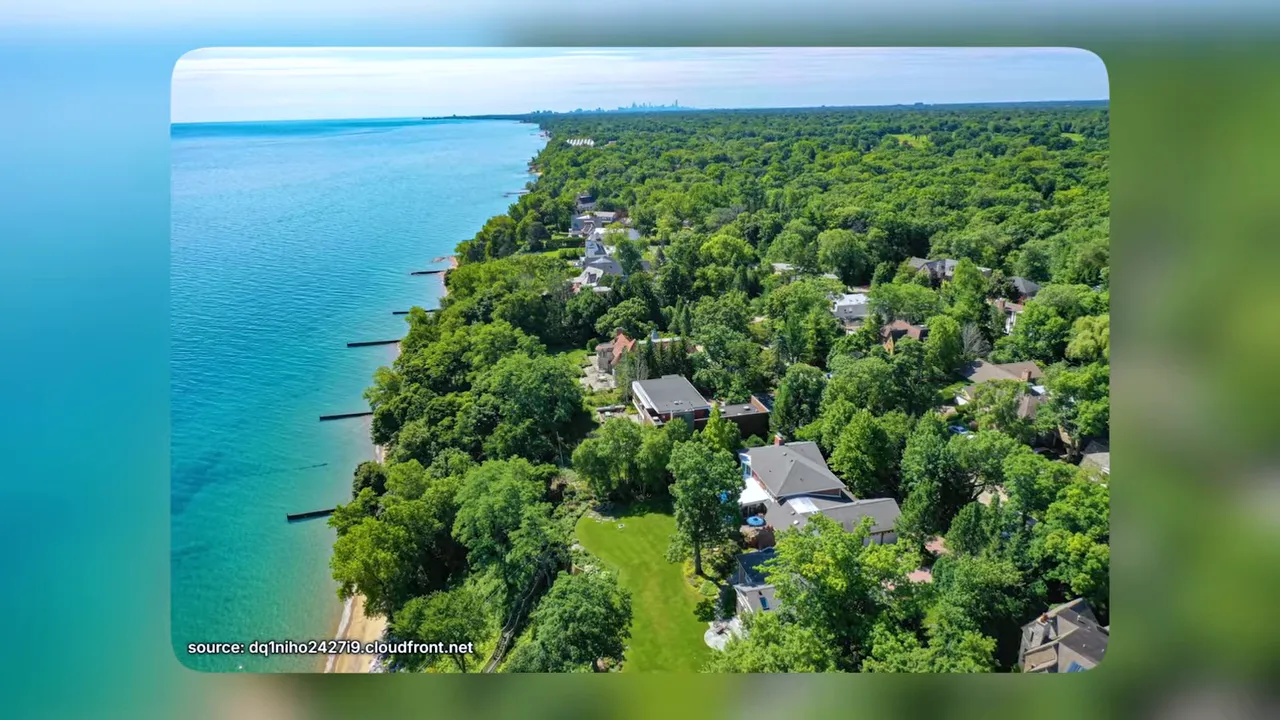
Go west instead, and the water disappears, but the luxury absolutely does not. In the western suburbs, Chicago real estate is often defined by square footage, large lots, custom architecture, country clubs, and easy access to major job centers and expressways.
- The North Shore: Lake Michigan, estate privacy, historic homes, and a quieter pace.
- The West Suburbs: Bigger homes, more land, custom construction, and strong downtown amenities.
That is the decision underneath every number and every community on this list.
Wilmette: The Front Door of the North Shore
Wilmette works well for buyers who want the North Shore name without feeling too far removed from Chicago. You still get the lake, tree-lined streets, and the suburban comfort that people expect, but the town remains connected and easy to navigate.
The downtown is walkable, and the streets do not feel isolated or overly suburban. Housing is also diverse. Early and mid-1900s homes sit beside renovated properties and new luxury construction, so the character can shift dramatically from one block to the next.
That mix is a major part of Wilmette’s appeal in Chicago real estate. It feels established, but it does not feel stuck in one architectural style or one buyer profile.
Wilmette Home Prices and Competition
Typical home values in Wilmette sit in the high $900,000s, around $1 million, while median sale prices have been in the low to mid-$1.3 million range. That gap matters.
Smaller and older homes can keep the entry point lower, at least relative to the rest of the North Shore. But lakefront properties and newer high-end homes push the median much higher. Homes can move in roughly a month, and multiple-offer situations remain common.
In Wilmette, the address and location often matter just as much as, if not more than, raw square footage.
Evanston: More City Energy on the North Shore
Evanston is the North Shore community that still feels the most like a city. It has the lake, older homes, condo buildings, restaurants, shops, and a downtown with real energy. It is a strong fit for anyone who wants more room than Chicago offers but is not ready to leave urban convenience behind.
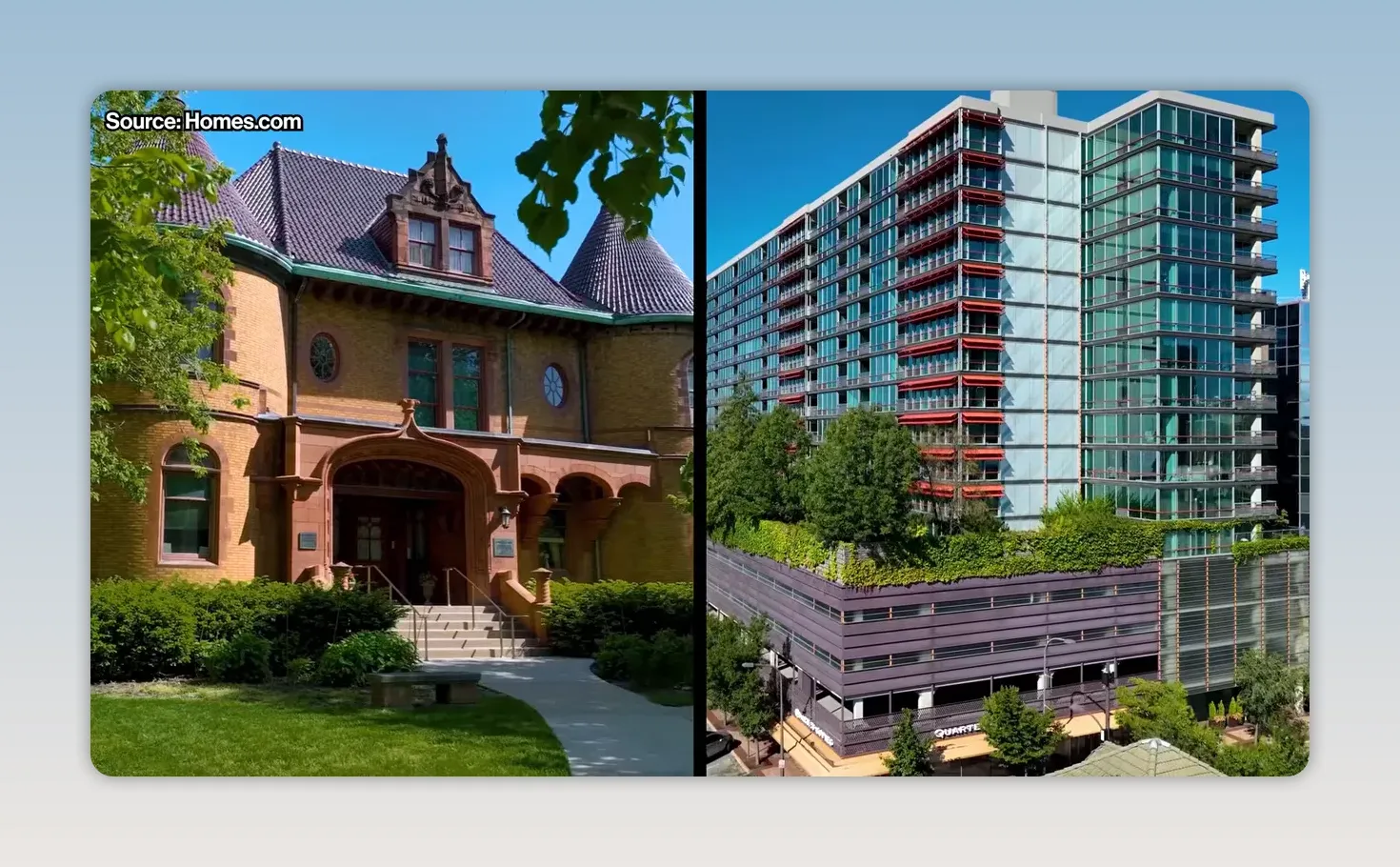
The trade-off is straightforward: more density means more activity and convenience, but less of the quiet estate feeling found farther north. Evanston is not trying to be a gated, low-traffic enclave. It offers a more connected, active version of North Shore living.
Two Very Different Evanston Markets
Citywide median prices can sit in the low to mid-$400,000 range because that figure includes condos and denser neighborhoods. But North Evanston, particularly closer to the lake and among larger single-family homes, moves into the high $800,000s and toward $1 million.
That is why broad citywide numbers can be misleading in Chicago real estate. Evanston is one town, but it contains two very different buying experiences:
- Condos and denser neighborhoods with a more accessible price point.
- Larger North Evanston homes near the lake, where values push much higher.
Glencoe: Privacy, Estates, and a Slower Pace
Glencoe is where the North Shore stops feeling like a typical suburb and starts feeling like estate country. Private lakefront homes, large lots, mature landscaping, and quiet streets define the experience here.
It also offers highly regarded public schools. The local high school has earned an approximately 8 out of 10 rating on GreatSchools, and the town’s polished downtown adds another layer of convenience.
The real draw, though, is privacy. Homes often sit back behind gates and mature trees. The pace is slower, and the streets are quieter than in much of the rest of the North Shore.
Typical home values are in the mid to high $1.6 million range, while recent median sale prices have been around $2 million. This is a meaningful step up from Wilmette and Evanston, and it reflects exactly what buyers are paying for: space, privacy, location, and the lakefront lifestyle.
Hinsdale: Western Suburban Luxury on Full Display
Head west from Chicago and luxury starts to look different. There is no shoreline address, but there are bigger homes, larger lots, country clubs, upscale restaurants, boutique shopping, and proximity to western job centers and major highways.
Hinsdale makes the case for the western suburbs better than almost anywhere. Turn onto a street here and the custom homes do the talking. You see mansion-style designs, high-end architecture, and streets where the homes themselves make you slow down.
In this part of Chicago real estate, wealth is visible in the homes, the streets, and the overall feel of the town.
Hinsdale Prices: From Upper Six Figures to Estate Homes
Typical home values in Hinsdale fall in the low $1.3 million range. Premium homes near downtown can top $1.9 million, giving buyers a broad range depending on the lot, architecture, and exact location.
That range is important. Hinsdale can offer an upper-six-figure entry point, but it can also deliver full estate properties. For buyers who value a large custom home more than a lakefront setting, Hinsdale is one of the strongest options in Chicago real estate.
La Grange: A West Suburb Changing Fast
La Grange is one of the most interesting communities in the western suburbs because it is changing fast. It was not always included in conversations about the area’s wealthiest suburbs, but more buyers are moving in because the lifestyle is hard to duplicate.
It has a similar feel to Oak Park. It is suburban, but still connected to the city. The downtown is walkable, the homes are historic and beautiful, and the streets are lined with mature trees, front porches, and wraparound porches. People tend to stay here for years.
Downtown Chicago is roughly 25 to 30 minutes away depending on traffic, which is a major part of the appeal.
The Price Signal Buyers Should Not Ignore
Recent median sale prices have been in the $600,000 range, but that can be misleading. Those numbers include starter homes, such as three-bedroom, one-bath homes around 1,200 square feet, selling for more than half a million dollars.
The bigger number is what tells the story of where La Grange is heading: building a new home on an infill lot starts around $2 million.
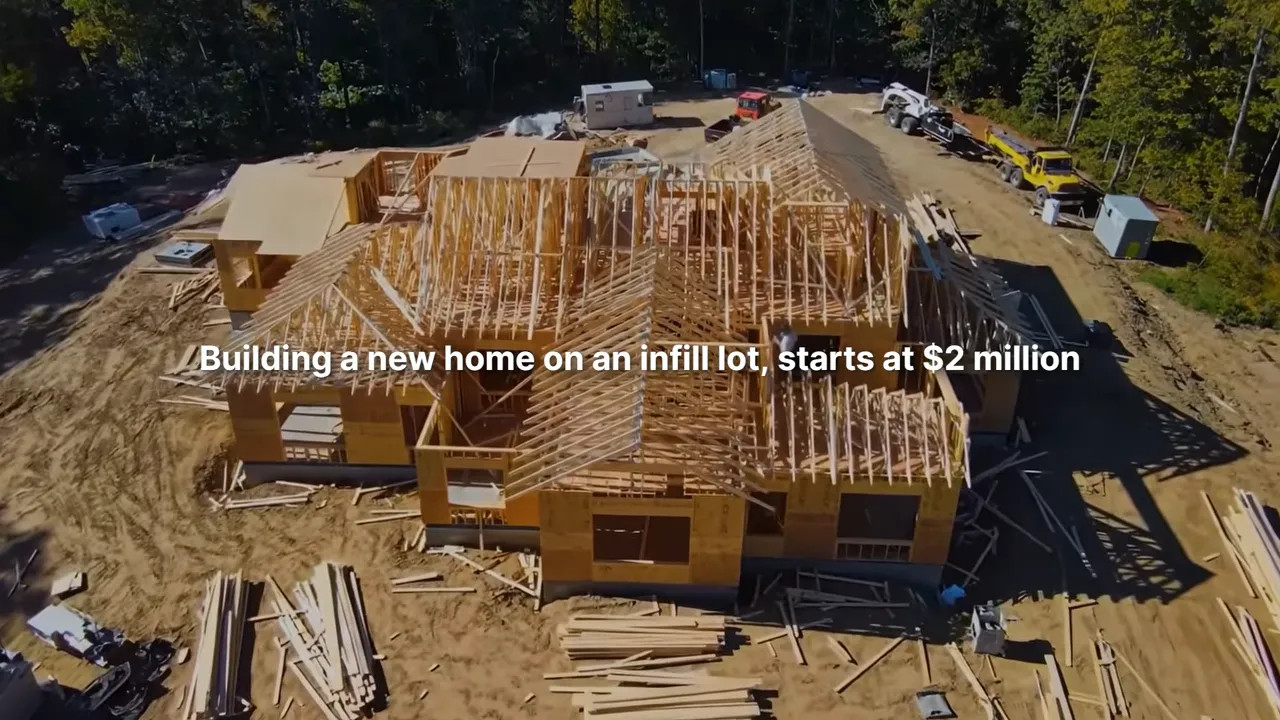
That does not mean every La Grange home costs $2 million. It means demand, land values, and buyer expectations are pushing the market higher. In Chicago real estate, that kind of infill activity is often a strong sign that a community is evolving.
Why Chicago Real Estate Prices Keep Climbing
Inventory across Chicagoland remains tight into the second half of 2026. That is one of the biggest reasons prices continue to rise, especially in desirable communities like these.
Thirty-year mortgage rates have settled into the high 6% range, and many homeowners are reluctant to give up the lower rates they locked in during 2020 and 2021. The result is simple: fewer homes come to market.
With limited supply and continued demand, buyers are still competing for the right homes. That is particularly true in the upper tier of Chicago real estate, where location and condition make a major difference.
A strong plan matters because the buying process is not just about deciding what price range feels comfortable. It is also about knowing:
- Which towns best match your lifestyle priorities.
- Whether you value lake access, privacy, lot size, walkability, or commute convenience most.
- How quickly you need to act when the right home becomes available.
- What kind of home is realistic at your budget in each community.
|
Which Luxury Lifestyle Fits You Best?
Every one of these communities sits near the top of the Chicago real estate market, but they are not interchangeable.
- Choose Wilmette for North Shore access, a connected feel, and a wide range of housing styles.
- Choose Evanston for lake access with more city energy, dining, shops, condos, and convenience.
- Choose Glencoe for privacy, estate living, mature trees, and a slower pace.
- Choose Hinsdale for western suburban architecture, custom homes, and larger-home luxury.
- Choose La Grange for historic charm, walkability, city connectivity, and a market with momentum.
The North Shore is about water, legacy, and privacy. The western suburbs are about land, space, and substantial homes. The right move in Chicago real estate comes down to the lifestyle you want once you are home, not just the number attached to the listing.
For a closer look at current opportunities across these communities, you can search Chicagoland properties by location and price range.
Frequently Asked Questions About Chicago Luxury Suburbs
Which Chicago suburb has the most lakefront estate feel?
Glencoe offers one of the strongest estate-oriented North Shore experiences, with private lakefront homes, large lots, mature trees, and a slower, quieter pace.
Is Evanston more urban than other North Shore suburbs?
Yes. Evanston has more density, condos, restaurants, shopping, and city-like energy than quieter North Shore communities farther north.
What is the main difference between North Shore and western suburb luxury?
North Shore luxury centers on Lake Michigan, privacy, and established estates. Western suburb luxury usually emphasizes larger homes, larger lots, country clubs, and access to western job centers.
Why is La Grange becoming more expensive?
Demand is rising while inventory remains tight. The fact that new infill construction starts around $2 million also signals increasing land values and buyer interest.
Leave A Comment