
Chicago Market Changes in 2026: What New Transit, Development, and Events Mean for Buyers
The Chicago market is getting reshaped by some seriously big moves in 2026. We are talking about the city’s biggest train expansion in decades, a new Chicago Fire stadium anchoring The 78, and a $1.7 billion casino complex rising along the river.
Not every project opens this year, and that is exactly the point. Construction, infrastructure commitments, and long-range development plans can start changing how an area feels well before a ribbon gets cut. If you are buying, selling, or planning a move, it is worth separating what is already happening from what is still years out.
The Red Line Extension Is Finally Moving South
For years, the Red Line has ended at 95th Street. That created a real barrier for people farther south, who often needed to take a bus or drive just to reach the train.
That is beginning to change. The CTA Red Line Extension broke ground in April, marking real construction rather than another proposal or planning study. The project will add roughly 5.5 miles of track from 95th Street to 130th Street, extending the reach of a direct train trip toward downtown.
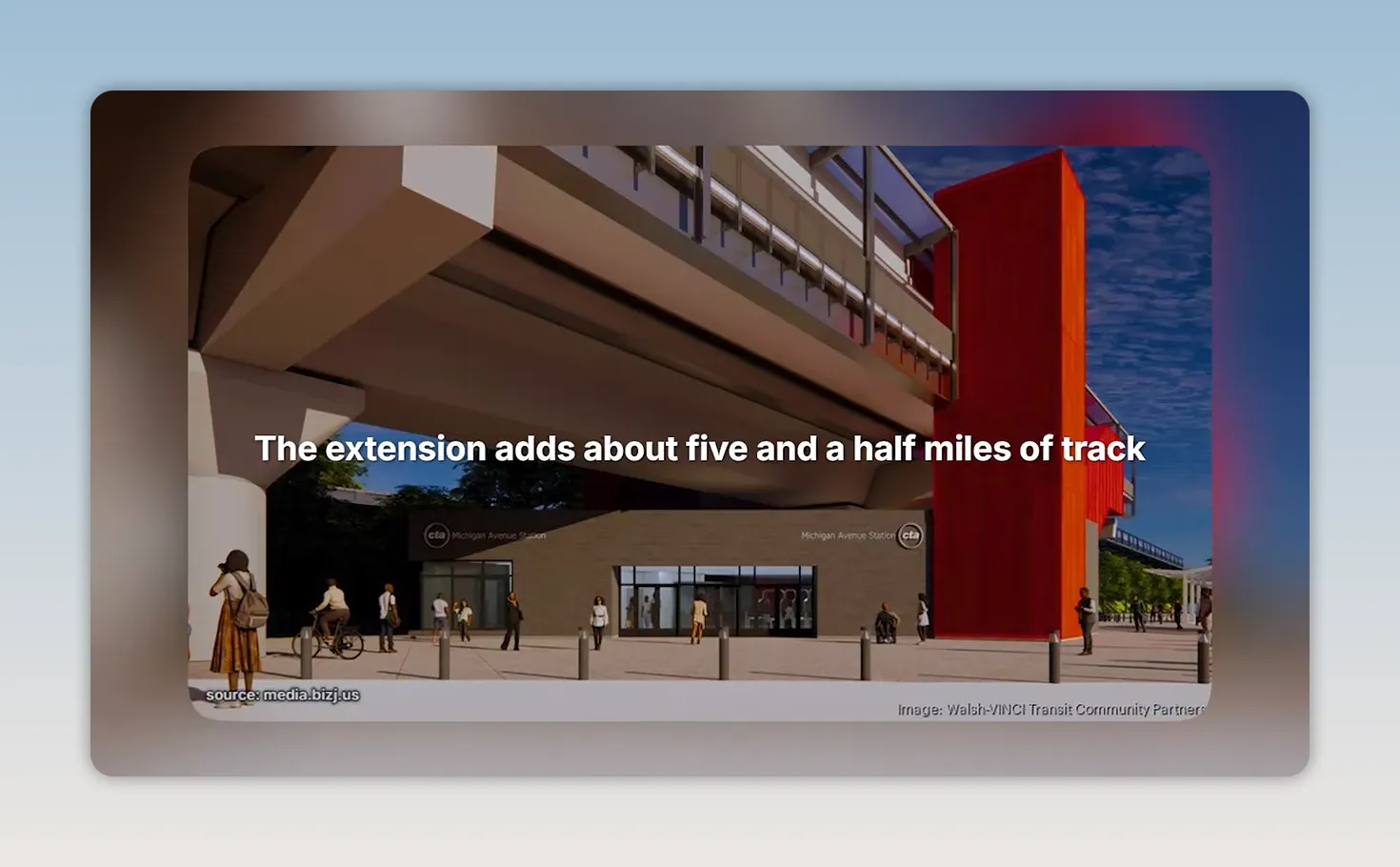
Four new stations are planned near:
- 103rd Street
- 111th Street
- Michigan Avenue, around 116th Street
- 130th Street
These are not meant to be simple platforms dropped into a neighborhood. The plan includes bus connections, bike and pedestrian access, and parking so each station can work more like a transportation hub.
Here is the reality check: trains are not expected to run until around 2030. Construction will move through different zones between 95th and 130th for much of the decade. So if you are looking in this part of the Chicago market, you have to weigh both sides of the equation: years of construction disruption now, and substantially improved access later.
That is why smart buyers pay attention early. By the time the first trains are running, the market may have already adjusted to the new convenience.
The 78 Is Going From Empty Potential to a New District
Between the South Loop and Chinatown sits The 78, a massive riverfront site that has felt like a giant pause button for years. It has rail access, skyline views, river frontage, and plenty of land, but it has never fully become the neighborhood it was positioned to be.
That is changing with Chicago Fire FC’s privately funded soccer stadium. The planned venue will hold more than 22,000 fans, with the team targeting a 2028 opening.

The stadium is only the start. Related Midwest’s larger plan allows for up to roughly 10,000 homes as part of a mixed-use district that could eventually include:
- Residential buildings
- Office space
- Retail and restaurants
- Open space and riverfront improvements
- A proposed Red Line station near 15th Street
That 10,000-home number is a long-range cap, not a promise that thousands of homes are suddenly hitting the Chicago market this year. Still, it tells you the scale here. This is a whole district being built from the ground up.
City Council approved about $425 million in tax funding in July for infrastructure including roads, river wall work, a plaza, and other site improvements designed to unlock development beyond the stadium itself.
For anyone considering the South Loop or Chinatown, expect cranes, detours, noise, and the usual Chicago construction mess for a while. The upside is that the awkward gap between those neighborhoods has a real shot at becoming an active riverfront place to live, work, and spend time.
Bally’s Casino Will Change River West, Just Not as Soon as Older Reports Said
Over in River West, the former Freedom Center site is becoming a major entertainment destination beside the river. Bally’s permanent casino and hotel complex is planned to include a 500-room hotel tower, a roughly 3,000-seat theater, gaming, dining, a riverwalk extension, and public open space.

This is a huge change for an area that has historically felt quieter and more industrial than the nearby core of downtown.
One thing needs correcting, though. Older information still points to a 2026 opening. Bally’s topped off the permanent complex in April and moved the target to spring 2027. The temporary casino at Medinah Temple continues operating while the permanent site is completed.
That timing matters in the Chicago market. Do not make a housing decision based on an opening date you saw in an old headline. Look at where construction actually stands and ask whether the eventual lifestyle fits you.
For River West, River North, and the northwest edge of downtown, the key question is not just whether property values might change. It is whether you want future riverwalk activity, restaurants, hotel traffic, theater crowds, and more round-the-clock energy around your home.
Fulton Market Is Established, But It Is Not Finished
Fulton Market already feels like one of the most active parts of the city. Old loading docks and brick buildings sit beside polished storefronts, restaurant patios, hotel lobbies, office towers, and newer residential projects. The area around Morgan Station can feel packed on a Saturday, and that energy is a huge part of the draw.
But Fulton Market is not done. The 2026 construction pipeline is more selective than it was during the biggest boom years, though there are still major projects in motion. A residential tower on North Morgan is heading toward 2027, while another project on Ada is expected to wrap up this year.
The city continues pushing the mixed-use district, especially as residential development expands north of Lake Street. On the office and retail side, Sterling Bay’s 360 North Green added a major office building with ground-floor retail. New restaurants keep coming in, even as familiar names such as Time Out Market have closed.
Do Not Buy the Neighborhood Label
In the Chicago market, a neighborhood name on a listing is never enough. Two condos can both say Fulton Market while delivering completely different day-to-day experiences.
Compare the numbers that actually affect your payment and your resale position:
- Price per square foot: Compare similar homes, not just headline list prices.
- Monthly HOA dues: Understand the amount and exactly what is covered.
- Building reserves and special assessments: These can make a cheaper condo much more expensive.
- Parking: Confirm whether it is included, deeded separately, leased, or unavailable.
- Block-level walkability: A home by Morgan Station lives differently from one several blocks west.
Go through the area on a busy Saturday afternoon, then come back on a quiet weekday morning. That comparison will tell you a lot more than an amenity deck brochure ever will.
Chicago’s Event Calendar Changes How Entire Areas Feel
Big events do not move the entire Chicago market by themselves. But they absolutely change the rhythm of specific neighborhoods. Grant Park shifts personality, lakefront traffic gets louder, hotels fill up, restaurant demand rises, and road closures become part of normal life for a weekend.
The 2026 calendar includes several major draws:
- The Chicago Auto Show at McCormick Place in February
- C2E2 at McCormick Place in late March
- The National Restaurant Association Show in May
- Lollapalooza in Grant Park in July
- The Chicago Marathon on October 11
NASCAR paused its downtown street race for 2026, though the possibility remains open for a 2027 return. Even without that race, the year stays packed.
If you are considering a home near Grant Park, the South Loop, McCormick Place, or the lakefront, event activity should be part of your lifestyle calculation. It can mean more vibrancy and easier access to the action. It can also mean traffic, detours, crowds, and a different experience during peak weekends.
What the 2026 Chicago Market Numbers Actually Tell You
This is where people often get the Chicago market wrong. The city does not feel like it is going through some massive bargain reset. Prices have moved up, yet buyers still need to be selective building by building and block by block.
Redfin’s rolling three-month view through May put Chicago’s median sale price in the low $420,000s, with homes taking roughly a month to sell. Meanwhile, Zillow showed a typical home value in the mid-$330,000s at the end of May.
Those numbers are not a contradiction. They measure different things.
- Redfin’s figure reflects the median price of homes that sold during that period, based largely on actual closed sales.
- Zillow’s figure is an estimated value across the city’s entire housing stock, including homes that were never listed for sale.
In plain English, the specific mix of homes closing right now can be more expensive than the estimated value of every home across Chicago. You can review how each company frames its housing data through Redfin’s market data center and Zillow’s housing data resources.
Citywide figures are only the starting line. The Chicago market is really a collection of very different submarkets packed into one city. Home type, location, condition, block, and building expenses all change the math.
Budget From the Building and Neighborhood Out
Condos add another layer to the Chicago housing equation. A purchase price does not tell the whole story when HOA fees, reserve balances, potential special assessments, and parking costs are involved.
Start with the building and neighborhood, then work outward to the citywide data. That means getting clear on the home type you need, the daily lifestyle you want, the transit access that matters to you, and the recurring costs you can comfortably handle.
The projects making headlines are worth following, but timelines matter just as much as the renderings. Knowing what is already here, what is under construction, and what is still years away can separate a smart move in the Chicago market from an expensive mistake.
Build Your Plan Around the Change That Actually Fits Your Life
The Red Line Extension, The 78, Bally’s, Fulton Market construction, and the event calendar all point to the same thing: Chicago is changing in very specific pockets, not all at once and not in the same way everywhere.
There is no one citywide answer to where prices are headed or which neighborhood is “best.” The right move depends on your budget, timeline, commute, tolerance for construction, and the kind of day-to-day environment you actually want to live in.
|
Posted by John Sintich on
Leave A Comment